Description
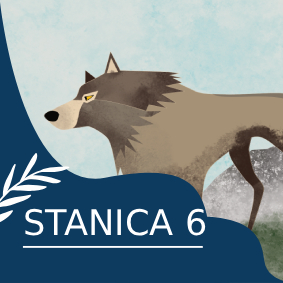
Karst, Mount Mosor – Karst is omnipresent in Dalmatia. It refers to a specific type of relief that develops where limestone or dolomite bedrock meets the action of water. From the outside, it appears solid and old, but it is actually very porous and sensitive to external influences. Here we present Mosor and the geological structure of its rocks. At the very foot of the mountain, we have an example of terra rossa soil. Terra rossa is so called heavy soil, compact and low in humus. However, it absorbs water easily and retains it for a long time, which allows plants to survive on it during the dry, hot, long summer. We recall how people in this area practiced agriculture and lived from the fruits of their hard work, and we can see various fruits characteristic of this region. In the past, people enriched the surroundings of Mosor and Zamosorje with various agricultural crops or used the benefits of wild plants. On the mountain, you can see some of these plants such as sage, rosemary, lavender. At the very top, you can see the iris, proclaimed the Croatian national flower in 2000. It is a widespread plant known for flowers in various colors, most commonly purple here. In the wall niches, you can see some fruit crops: mulberry, Tugarka cherry, Marasca sour cherry, Žrnovnica apple, cornelian cherry, and almond. In addition to plants, we also see animals, and we begin with birds. In the upper right corner, there is the eagle owl, the largest owl in Europe, with a wingspan of up to 190 cm. In the upper left corner is the golden eagle, with large and powerful wings that allow it to fly very high, with a wingspan of up to 2.5 meters, a head with a sharp and strong beak used for feeding, and large eyes with excellent vision. The black and white bird is the magpie, most often seen in settlements and recognized by its plumage. The hoopoe is recognizable by its striking colors and the large crest on its head, which it can control. The Eurasian jay, also called the mocking jay, stands out for the intense blue feathers on its wings. It is the loudest bird in this area and got its name from its loud calls. It can imitate the calls of other birds and even animals that are not birds in order to deceive predators and conceal its presence. The golden oriole stands out for its bright yellow plumage with black wings. It is a songbird that we often hear but rarely see because it hides in the crowns of deciduous trees. The great spotted woodpecker has a black back, a distinct white patch on its wings, and red under tail coverts. It is our largest woodpecker species and the drummer of our forests. It feeds on bark beetles and their larvae, which it extracts by pecking at wood with its strong, sharp tipped beak. The kingfisher is one of the most colorful European birds. Its crown and wings are greenish blue, its back and tail bright blue, its underparts and cheek patch warm orange brown, and its throat and neck patch snow white. Despite its vivid colors, inexperienced observers have difficulty noticing it and usually see it only when it takes flight. The rock partridge is a mountain bird from the pheasant family that inhabits rocky terrain and steep slopes of the Dinarides. It is recognizable by its elegant appearance, ash gray plumage, and red beak. Fast and agile, it prefers running to flying and skillfully hides among rocks and low vegetation. We now move on to mammals. The wolf is a mammal from the order Carnivora, measuring on average 170 cm from the tip of the nose to the tip of the tail. The gray wolf feeds on all species of large mammals living in these areas. They live in packs of four to six members. In Croatia, it is endangered and therefore strictly protected. Below the wolf is the badger, an animal with short limbs and a stocky build that lives in underground burrows. Its fur is usually gray on the back and black on the lower parts, with characteristic black and white markings on the face. Although classified as a carnivore, the Eurasian badger is an omnivore and insect eater. Below the rock, we see the beech marten. Its body is elongated and slender, with short, dense gray brown fur. On its throat, it has a white divided patch that extends to the inner sides of the front legs. It inhabits rocky areas, groves, and abandoned buildings. The marten is also the Croatian national animal. The former currency was named after it because marten fur was valuable in the past and used as a means of payment. The hare is most easily recognized by its long ears on its elongated head. This swift herbivore with strong hind legs is more active at night and inhabits open habitats such as fields, meadows, and forest edges. The wildcat differs from the domestic cat in fur color, a somewhat shorter tail, and a more robust build. It is usually active at night and chooses secluded places to rest during the day. All its senses are highly developed, especially its sight, which allows it to navigate even in near complete darkness. The fox is a fast, adaptable, and extremely intelligent animal that thrives in diverse habitats. It most often inhabits open areas such as fields, forest edges, and grasslands, but increasingly appears near human settlements. It is recognized by its pointed snout and thick fur that ranges from reddish yellow to reddish brown on the back, while the underside and neck are white. The lower parts of its legs and its paws are black. It also stands out for its long, bushy tail. The weasel is a slender animal with a long tail and short legs, which allows it to follow its prey, most often small rodents, into their shelters. Its fur is reddish brown. It is mostly active at night and usually lives near rural households, meadows, and forest edges. Finally, we have one reptile, the European legless lizard, a robust and long legless lizard that resembles a snake. What distinguishes it from snakes are its eyelids, a much longer tail, and a blunter head shape. Its body ranges from yellow brown to brown. It inhabits open meadows and groves.